
The Traditional Recovery Ritual Around Belly Binding
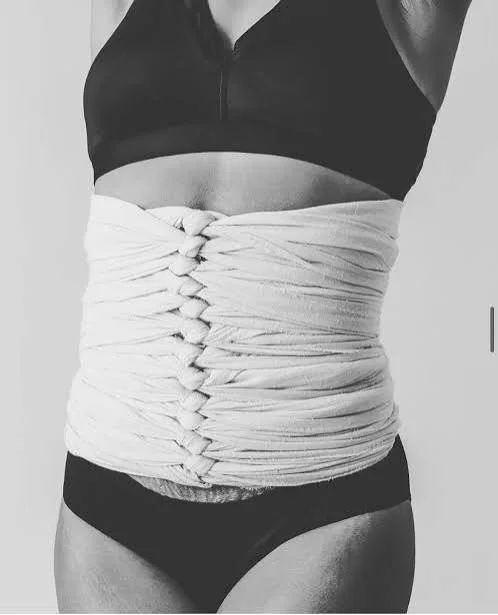
In the United States, belly binding is usually presented as a product. A wrap. A thing you put on your body to get a result.
In the tradition it comes from, the wrap is the last step of something much larger. Understanding that changes how you think about your own recovery, even if you never follow the full practice.
Binding belongs to a confinement tradition
Bengkung belly binding comes from Malay postpartum care, part of a confinement period often described as lasting around forty to forty four days. During that window, the new mother is not expected to run her household. She is fed, kept warm, massaged, wrapped, and largely relieved of everything except feeding her baby and healing.
Similar structures exist across the world. Chinese families practice sitting the month. Latin American families observe la cuarentena. Korean families practice sanhujori. The details differ, but the underlying belief is remarkably consistent: birth opens the body, and the weeks afterward are for closing it again with warmth, rest, and hands on care.
The wrap, in that context, is not shapewear. It is the final layer of a caretaking sequence.
What traditionally comes before the wrap
Warmth applied to the body
In Malay practice, a warm compress step called bertungku is used on the abdomen before wrapping. Traditionally this involves a warmed stone wrapped in cloth, sometimes with herbs, pressed and moved gently across the belly. The purpose is to warm the abdomen, ease cramping, and relax the tissue before it is supported.
A herbal paste on the abdomen
A herbal paste, known as tapel or param depending on the region and the blend, is traditionally spread across the abdomen before the cloth goes on. Blends vary by family and practitioner and often include warming ingredients such as lime, turmeric, ginger, and other aromatic roots. Tradition holds that the paste supports the toning of the abdomen and adds warmth beneath the wrap.
A herbal bath or a warm cleansing
A warm herbal bath or wash often precedes the sequence, both as physical comfort and as a marker that this is care time, not chore time. The herbs used vary widely by region and household.
Postnatal massage
In many households, a traditional postnatal massage from an experienced practitioner precedes the wrap. This should only ever be done by someone trained in postpartum bodywork, and never over a healing incision.
Why the sequence matters, not just the cloth
Think about what that series of steps actually delivers. An hour of warmth. Touch. Someone's full attention. A clear beginning and end. Then the physical support of the wrap, applied to a body that has just been warmed and relaxed rather than a body that has been hunched over a bassinet for six hours.
That is a very different experience from pulling on a band before a pediatrician appointment. And it is why I encourage my clients to treat binding as an appointment with themselves rather than a garment on a to do list.
How I adapt this for Manhattan families
I am not going to pretend that a Tribeca one bedroom is a Malay confinement house, and I do not claim to practice the full tradition. What I do is borrow its logic and adapt the pieces that are safe, practical, and respectful of where they came from.
In practice, that can look like:
A warm compress across the abdomen before wrapping, which helps with cramping and makes the wrap more comfortable.
A warm herbal sitz bath or herbal bath earlier in the day when your healing allows it, so the wrap lands on a body that has already been cared for.
Quiet during the wrap. No phone, no visitors, no logistics. Fifteen minutes of your recovery belonging entirely to you.
Rest immediately afterward while I care for your baby, rather than straight back into the day.
Some traditional elements I leave alone unless a client specifically brings her own family's practice to me. Herbal pastes applied to the skin, for example, vary enormously by blend and can irritate sensitive or healing skin, so I only work with what is appropriate for your individual situation and cleared by your provider.
A note on borrowing carefully
These practices belong to living cultures and to families who have carried them through generations. Naming where they come from is part of using them respectfully. When a client tells me her grandmother did something particular after birth, I want to hear it, and I will happily build her care around her own family's tradition rather than mine.
The takeaway even if you never book a session
You do not need cloth, herbs, or a practitioner to take the core lesson from this tradition. What these cultures understood is that recovery is something done for the mother, deliberately, by other people, for a defined period of time. Warmth, rest, food, and hands.
If you can arrange even a small version of that in your own home for the first six weeks, you are practicing the heart of it.
If you would like help building that structure into your fourth trimester, book a free consultation and we will design it around your family.
This post is educational and is not medical advice. Traditional practices vary widely by culture and practitioner. Talk with your provider before beginning belly binding, herbal preparations, or bodywork after birth.
