
Bengkung Belly Binding vs. Postpartum Girdles and C-Section Binders
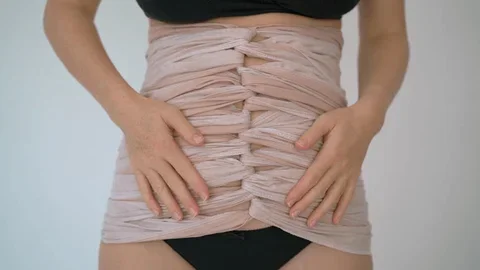
You can buy a postpartum belly wrap online tonight and have it in your apartment tomorrow. So why would anyone book a doula to wrap them in fifteen yards of cotton?
It is a fair question. They may look like they do the same job, but they work very differently on a body that has just given birth. Here is an honest comparison so you can decide what belongs in your recovery plan.
What each one actually is
Bengkung belly binding is a traditional Malaysian practice using one long piece of cotton cloth, wrapped in overlapping layers from the hips up to the ribcage and secured with a series of knots down the front. It is applied by hand, usually by a trained practitioner, and the tension is set individually at every layer.
A postpartum girdle or belly band is a manufactured garment, typically elastic or neoprene, that closes with velcro, hooks, or a zipper. It comes in sizes, it goes on in under a minute, and it usually covers the waist and lower abdomen.
A C-section binder is a wider abdominal binder, often provided by the hospital, designed to support the incision and the abdominal wall after surgery. Its job is specific and short term, and it should be used as your surgical team directs.
The differences that matter
Coverage
A Bengkung wrap runs from the hips to just below the bust, which means it supports the pelvis, the abdomen, and the lower back as one connected unit. Most girdles cover a narrower band around the waist and abdomen. If your main complaint is lower back strain from feeding and carrying, the broader coverage tends to feel more supportive.
Direction of support
The Bengkung wrap starts low at the hips and builds upward, so the support lifts rather than compressing inward at the middle. A garment that squeezes only the waist can push pressure downward toward a pelvic floor that is already recovering. Downward pressure is exactly what a healing body needs to avoid.
Adjustability
This is the biggest practical difference. A wrap can be looser over a tender spot and firmer across the hips in the same application. A garment gives you one tension setting across the whole panel, which is fine if your body matches the sizing and frustrating if it does not. Bodies change quickly in the first weeks postpartum, and a cloth wrap changes with you.
Speed and convenience
A girdle is faster to put on, and that is its main appeal. A full Bengkung wrap takes real time and, at least at first, another pair of hands. But quick is not the same as gentle, and in the early weeks the way support is applied matters more than how fast it goes on.
Cost
A girdle costs a fraction of a professional wrap session. What you pay for with a doula is the wrap plus the assessment, the fit, the teaching, and the cloth itself, which you keep and reuse. Whether that is worth it depends on how much support you want and how much of your recovery you want someone else to hold.
The part that is harder to price
Belly binding, done traditionally, is care performed on you. Someone kneels down, works carefully around your body, asks how you are feeling, and adjusts. In a season when nearly all the care in your home is flowing toward the baby, being on the receiving end of it matters. Clients tell me the session was one of the more emotionally steadying moments of their early weeks. A garment from a box cannot do that.
Why girdles and tight shapewear are not safe right after birth
Postpartum girdles and tight shapewear place excessive downward pressure on a pelvic floor that is still vulnerable after birth. They squeeze the middle of the body with fixed, rigid compression, which can restrict your core's natural recovery instead of supporting it. Products that promise to shrink your waist on a schedule are working against your body, not with it.
If you had a cesarean, the hospital binder your surgical team provides is a different thing from shapewear. Follow their guidance for it in the early surgical days.
What belly binding can do
Belly binding aids in recovery by giving your body gentle, even support while it heals. It supports the abdominal wall, which can be especially helpful if you are healing from diastasis recti (a separation of the abdominal muscles). It can make movement more comfortable, encourage better posture during long stretches of feeding and carrying, and help you feel more secure and held in your body. Binding works best alongside rest, gradual movement, and pelvic floor physical therapy, which I recommend to clients constantly.
How I help clients choose to belly bind
In a consultation, I ask what is actually bothering you. Back pain while feeding, feeling untethered in your body, and core recovery all shape how I approach your wrap.
I also educate clients on why not to use postpartum binders and girdles right after birth. In the weeks after delivery, the hormone relaxin is still active in your body, keeping your joints and ligaments loose. Rigid compression on loosened tissue is not what your body needs. Belly binding is gentle, and the cloth relaxes and loosens as you wear it, so it moves with your body instead of forcing it.
If you want to talk it through before deciding, book a free consultation. I would rather you spend money on the right support than on the more elaborate one.
This post is educational and is not medical advice. Talk with your OB, midwife, or surgical team before using any form of abdominal binding after birth.
